Chronic and non-healing wounds may need more than standard wound care alone. Advanced supportive treatments such as Bioplasma Jet, Healite II LED phototherapy, shockwave therapy, cold plasma, and PRP may be added in selected cases to help support tissue repair, reduce bacterial burden, and improve the wound-healing environment.
What are innovative treatments for Chronic and Non-Healing Wounds?
Innovative treatments for Chronic and Non-Healing Wounds refer to advanced technologies and regenerative approaches used to support healing when standard wound care needs extra help. These treatments are generally considered
adjunctive, which means they are used in addition to standard wound care, not as a replacement for it.
This is important because many chronic wounds are not just skin problems. Delayed healing may be related to poor circulation, infection, diabetes, pressure, inflammation, or tissue damage. In these situations, advanced treatments may be added to the care plan to help improve healing conditions.
Standard wound care remains essential and may include:
- Wound assessment
- Cleaning and dressing the wound
- Debridement when needed
- Infection control
- Pressure relief or offloading
- Blood sugar control
- Circulation assessment and treatment of poor blood flow
Advanced Treatments for Chronic and Non-Healing Wounds
Bioplasma Jet
Bioplasma Jet is a low-temperature plasma technology studied for wound care. It produces reactive species that may help reduce bacterial burden and support healing activity at the tissue level.
As an additional wound treatment, Bioplasma Jet may help:
- Support wound disinfection
- Promote local healing activity
- Assist in the management of chronic or difficult wounds
Bioplasma Jet should be presented as a supportive therapy used alongside proper wound care and treatment of the underlying cause.
Healite II LED Phototherapy
Healite II LED phototherapy is a light-based treatment that uses specific wavelengths to support healing. It may help reduce swelling in damaged tissue, support local blood circulation, and stimulate collagen production, all of which can contribute to wound repair.
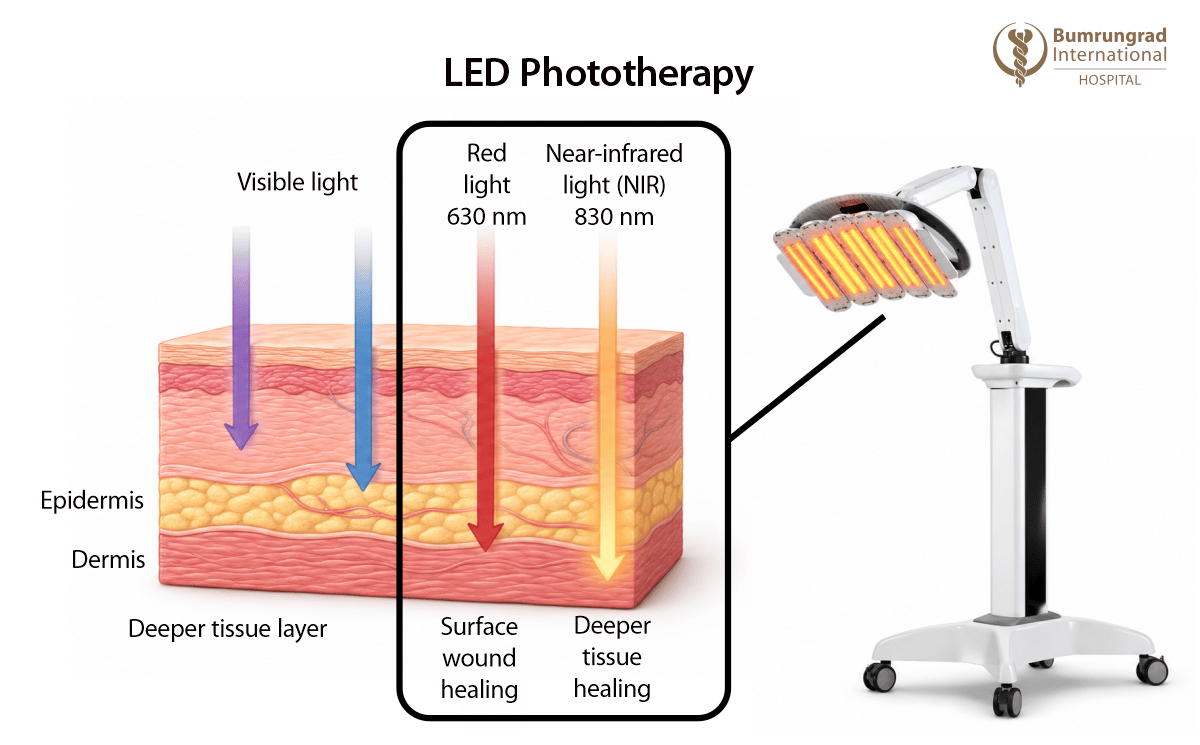
This treatment may be used as a supportive option for:
- Diabetic wounds
- Pressure injuries
- Chronic sores
- Necrotic wounds
Healite II is best described as an adjunctive therapy that may help improve the wound-healing environment.
Shockwave Therapy: dermagold100
Shockwave therapy with the dermagold100, also described as Spark Wave Therapy, is a non-invasive regenerative treatment used as an additional therapy for selected wounds, especially chronic non-healing wounds.
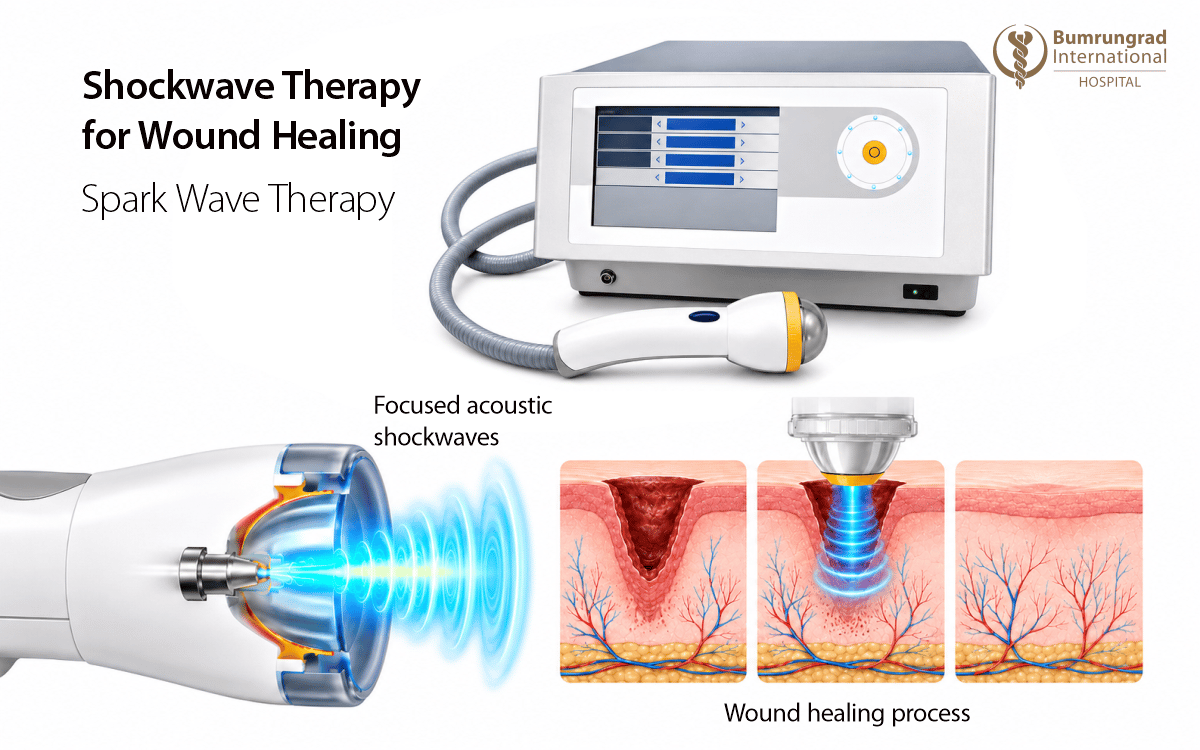
It is intended to support natural healing mechanisms and may help:
- Relieve pain
- Improve blood circulation and tissue supply
- Reduce inflammation
- Accelerate healing in acute and chronic wounds
- Lower the risk of wound infection
- Improve scar-related symptoms
- Improve quality of life
In wound care, it may be considered for:
- Acute wounds and burns
- Chronic wounds and ulcers
- Pathologic scarring
This should be positioned as a supportive regenerative treatment, not a substitute for core wound management.
Cold Plasma for Wound Care: Mirari Cold Plasma
Cold plasma is an emerging technology in wound care that may help reduce microbial burden and support tissue repair. It is being explored as an adjunctive treatment for wounds that need more than standard care alone.
Potential supportive roles may include:
- Helping reduce surface bacteria
- Supporting healing in chronic wounds
- Assisting in diabetic wound care
Cold plasma should also be described as an additional treatment option selected based on wound condition and clinical judgment.
PRP for Wound Healing
PRP, or platelet-rich plasma, is a regenerative treatment prepared from the patient’s own blood. It contains concentrated platelets and growth factors that may support tissue repair.
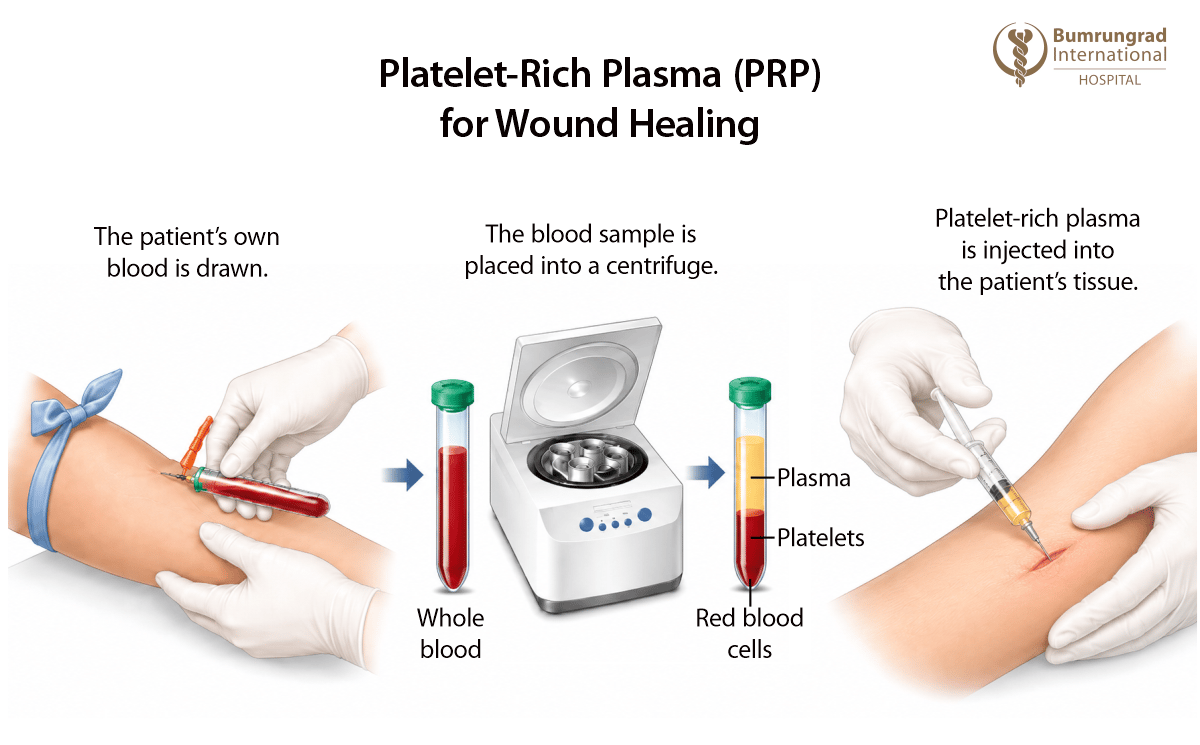
As an additional wound treatment, PRP may help:
- Support soft tissue healing
- Promote local repair processes
- Complement other wound care strategies
PRP is generally used as part of a broader wound care plan rather than as a stand-alone treatment.
Who may benefit from advanced supportive wound treatments?
These additional therapies may be considered for selected patients with:
- Chronic wounds
- Non-healing wounds
- Diabetic foot wounds
- Pressure injuries
- Leg ulcers
- Burns
- Necrotic wounds
- Problem scars
The most important point is that the wound must first be properly assessed. If blood flow is poor, infection is present, or pressure is not relieved, healing may still be delayed even when advanced therapies are added.
Why wound assessment still matters
Advanced wound treatments can support healing, but they work best when used within a complete wound care plan. Doctors still need to identify why the wound is not healing and address the underlying problem.
As explained in the uploaded wound assessment article, tests such as ABI, TBI, and TCOM may be used to check blood flow and tissue oxygen supply around a non-healing wound. These tests help guide treatment and show whether the wound has a good chance of healing.
At
Bumrungrad Holistic Wound Care & Vascular Clinic, patients with chronic wounds, diabetic foot ulcers, leg ulcers, pressure injuries, and other non-healing wounds can receive comprehensive assessment and individualized care, with advanced supportive treatments selected according to the wound’s cause and condition.
FAQ
What are advanced treatments for chronic wounds?
They are supportive therapies used in addition to standard wound care to help difficult wounds heal.
Can cold plasma help non-healing wounds?
Cold plasma is being explored as an adjunctive treatment that may help reduce microbial burden and support tissue repair in selected wounds.
Is PRP used for wound healing?
Yes. PRP may be used as an additional treatment to support tissue repair and complement other wound care strategies.
Are Bioplasma, LED therapy, shockwave therapy, cold plasma, and PRP replacements for standard wound care?
No. They are generally used as additional or adjunctive treatments alongside standard wound care and treatment of the underlying cause.
Why is wound assessment important before advanced treatment?
Because a wound may not heal properly if the real problem is poor circulation, low oxygen, infection, or ongoing pressure.
For more information please contact:
Last modify: May 12, 2026