When a wound does not heal, poor circulation may be the hidden reason. Revascularization is a treatment that restores blood flow to support healing in non-healing wounds caused by reduced circulation. It may include endovascular therapy, surgical bypass, or a hybrid procedure, depending on the severity and location of the blockage.
What is revascularization for non-healing wounds?
A non-healing wound is not always just a skin problem. In some cases, the real issue is reduced blood flow. When circulation is poor, the tissue does not receive enough oxygen and nutrients to repair itself. As a result, the wound may heal very slowly, remain open, or worsen over time.
This is why blood flow is such an important part of
wound care. If circulation is not adequate, even careful wound cleaning, dressings, and infection control may not be enough. In these cases, doctors may recommend revascularization to restore blood flow to the affected area and support wound healing.
How poor circulation affects wound healing
For a wound to heal properly, the body needs:
- Good blood flow
- Enough oxygen
- Healthy surrounding tissue
- The right wound care plan
If one of these is missing, healing can be delayed. In more severe cases, poor circulation can lead to
ischemic wounds, ongoing tissue damage, and a higher risk of limb loss.
Endovascular and surgical revascularization for non-healing wounds
Treatment depends on where the blockage is, how severe it is, and the condition of the wound.
Endovascular therapy
Endovascular therapy is a minimally invasive treatment performed from inside the blood vessel. It may involve:
- Balloon angioplasty – a small balloon is gently inflated inside the narrowed artery to widen it and improve blood flow
- Stent placement – a small mesh tube is placed inside the artery to help keep it open after treatment
- Atherectomy – a catheter is used to remove or reduce plaque buildup, especially in hard or calcified blockages
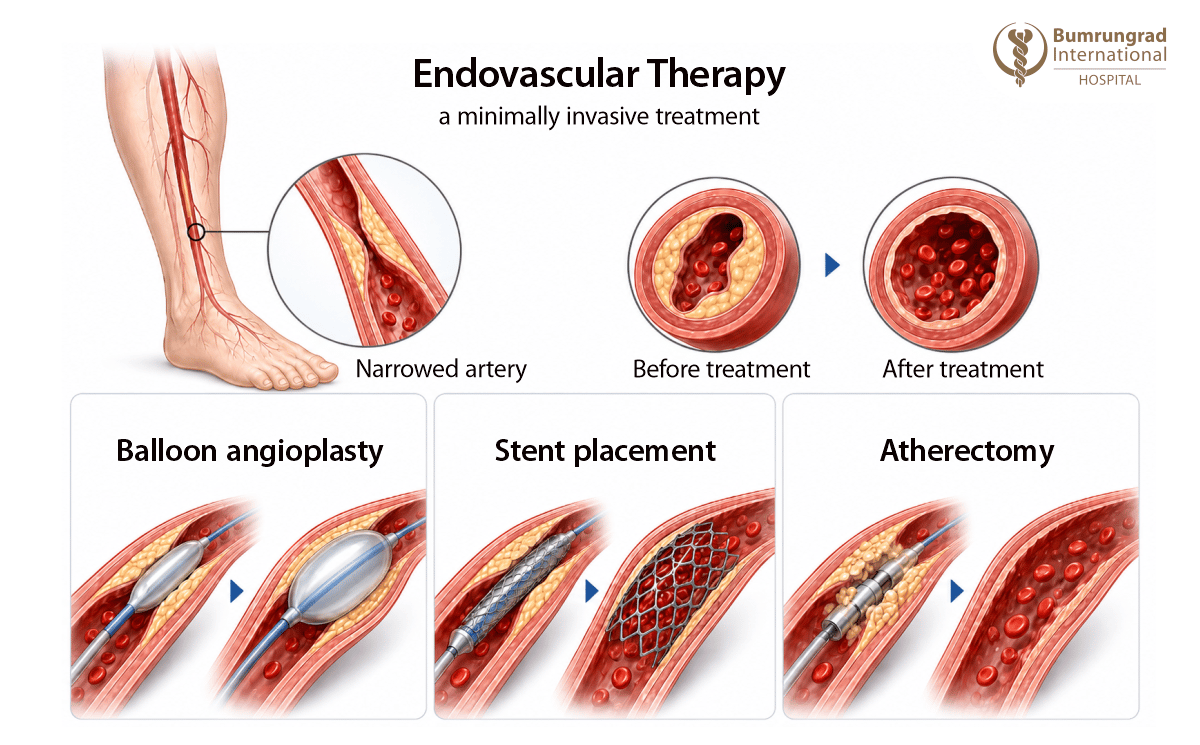
Because it is less invasive, recovery is often faster and there is less disruption to the surrounding tissue.
Surgical bypass
If the blockage is long or complex, doctors may create a new route for blood flow around it. This is called
bypass surgery. The graft may be:
- Vein graft – a vein taken from the patient’s own body, often used because it is natural tissue and can work well as a bypass channel
- Prosthetic graft – an artificial tube made from medical-grade material, used when a suitable vein is not available
- Biological graft such as Artegraft – a processed animal-derived graft used to help restore blood flow when a suitable vein is not available
- Biosynthetic vascular graft – a graft designed to combine the advantages of biological and synthetic materials, used in selected cases when a durable alternative is needed
Hybrid procedures
Some patients benefit from a combination of endovascular treatment and surgical bypass. This is called a hybrid procedure. It allows doctors to use more than one method in the same treatment plan, depending on where the blockage is and how severe it is.
How advanced imaging supports revascularization
Advanced imaging helps surgeons see the blood vessel system more clearly during treatment.
3D Bi-plane Imaging with Carbon Dioxide Injector provides detailed views from different angles, helping guide treatment with greater accuracy.
- 3D Bi-plane Imaging – shows blood vessels from multiple angles to help surgeons see the blockage and guide treatment more precisely
- Carbon Dioxide Injector – uses CO2 as a contrast agent in selected cases instead of traditional contrast dye, which may be helpful for some patients
Why early revascularization matters in wound care
When poor circulation is not corrected, the wound may become harder to heal and tissue damage may progress. Restoring blood flow early can support wound healing, reduce complications, improve tissue survival, and help protect the limb.
At
Bumrungrad Holistic Wound Care & Vascular Clinic, patients with non-healing wounds, ischemic wounds, and poor circulation can receive comprehensive wound and vascular assessment with personalized treatment planning.
FAQ
What is revascularization for non-healing wounds?
It is treatment used to restore blood flow to tissue affected by poor circulation, helping support wound healing.
How does poor circulation affect wound healing?
Poor circulation reduces the oxygen and nutrients needed for tissue repair, which can delay healing and increase the risk of complications.
What is the difference between endovascular therapy and bypass surgery?
Endovascular therapy works from inside the blood vessel, while bypass surgery creates a new route for blood flow around the blockage.
Can revascularization help a non-healing wound heal?
Yes. Improving circulation can support healing and reduce the risk of further tissue damage.
For more information please contact:
Last modify: May 12, 2026