Standard and essential wound care is the first step in treating chronic and non-healing wounds. This includes assessment, wound cleaning, debridement when needed, dressings, infection control, pressure relief, circulation evaluation, and treatment of the underlying cause. In selected cases, doctors may also add advanced supportive therapies such as topical oxygen therapy, negative pressure wound therapy, ozone therapy, or hyperbaric oxygen therapy to help improve the wound-healing environment.
Chronic wounds and non-healing wounds are not always just skin problems. A wound may heal slowly because of poor blood flow, low tissue oxygen, infection, repeated pressure, diabetes, or tissue damage. That is why the first priority is always to identify why healing is delayed. Once the wound has been properly assessed, doctors can decide whether standard wound care is enough or whether advanced supportive wound therapies should be added.
Standard Wound Care Comes First
For most chronic wounds, the foundation of treatment is a complete wound care plan. This may include:
- Proper wound assessment
- Wound cleaning
- Debridement when needed
- Appropriate dressings
- Infection control
- Pressure relief or offloading
- Blood sugar control in diabetic patients
- Circulation assessment
- Treatment of poor blood flow when needed
These steps are essential because wounds need good blood flow, enough oxygen, a clean wound bed, and the right healing conditions. If these problems are not addressed first, advanced wound therapies may offer limited benefit.
When Are Advanced Wound Therapies Used?
Some chronic or non-healing wounds need more support than standard care alone. In selected cases, doctors may add advanced therapies to help improve the wound-healing environment and support healing progression. These treatments are best described as
additional supportive therapies, not replacements for essential wound care.
Topical Oxygen Therapy (TOT)
Topical oxygen therapy delivers oxygen directly to the wound area. It is used in selected chronic or stalled wounds to support healing by improving the local wound environment. This may be considered when a wound needs extra support beyond standard wound care.
Natrox Mobile Topical Oxygen Therapy
Natrox is a portable form of topical oxygen therapy. Because it is mobile, treatment can continue while the patient remains active. This can make it a practical supportive option in longer treatment plans for selected chronic or non-healing wounds.
Negative Pressure Wound Therapy (NPWT)
Negative pressure wound therapy uses controlled suction to help manage wound fluid and support healing. It is one of the more established advanced wound therapies for selected wounds that need help progressing. Examples of NPWT systems include PICO 7, 3M KCI, and Curavac.
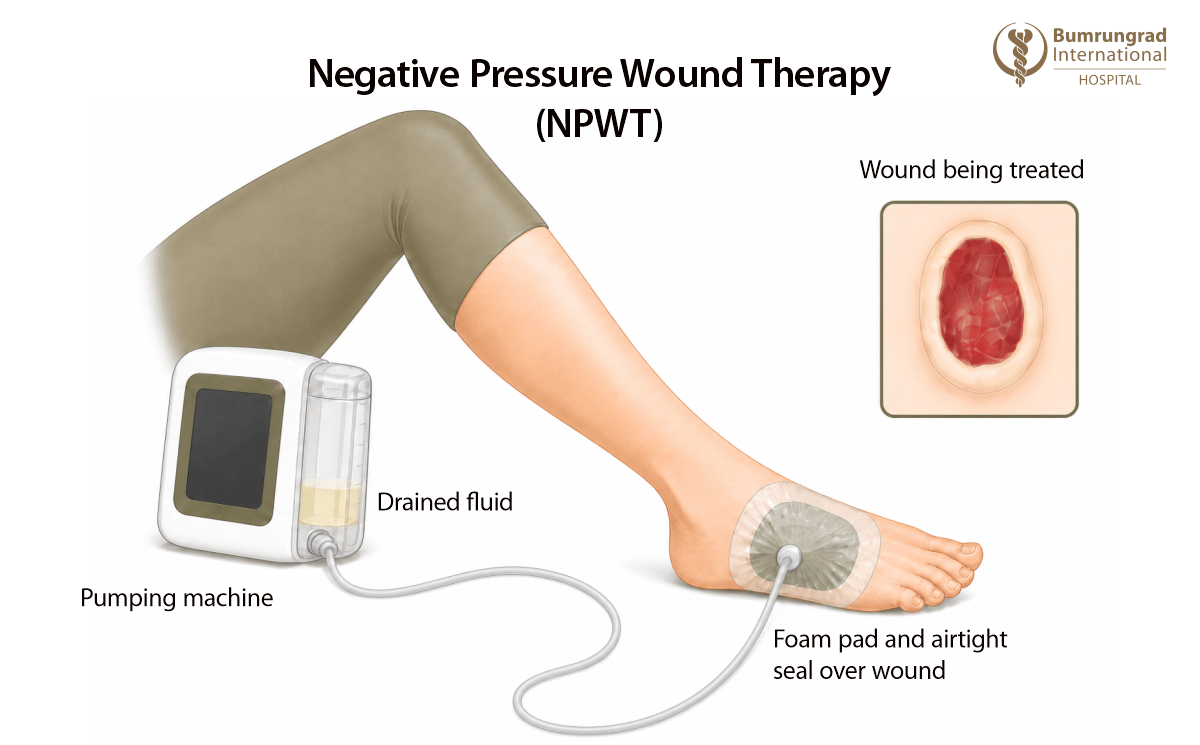
NPWT may help:
- Remove excess wound fluid
- Support granulation tissue formation
- Protect the wound environment
- Improve healing conditions in selected wounds
Although NPWT is widely used, it is still part of a broader wound care plan rather than a stand-alone treatment.
Ozone Therapy
Ozone therapy may be used as an additional supportive treatment in selected wound cases. The
Hyper Medozon Comfort is an ozone therapy device. In patient education content, ozone therapy should be positioned carefully as a supportive option for selected patients rather than a routine treatment for every chronic wound.
Hyperbaric Oxygen Therapy (HBOT)
Hyperbaric oxygen therapy is different from topical oxygen therapy. Instead of delivering oxygen only to the wound surface, HBOT involves breathing oxygen in a pressurized chamber to increase oxygen delivery to body tissues. In selected patients, this may help support wound healing as part of a broader treatment plan.
Why Proper Assessment Matters
A non-healing wound may stay open because the underlying problem has not been corrected. In some patients, doctors may need to assess circulation and tissue oxygen levels to understand why healing is delayed. This helps determine whether the wound is likely to heal with standard treatment alone or whether more advanced supportive therapies should be considered.
At Bumrungrad Holistic Wound Care & Vascular Clinic, patients with chronic wounds, diabetic foot ulcers, leg ulcers, pressure injuries, and other non-healing wounds can receive comprehensive assessment and individualized treatment planning, with advanced supportive therapies selected according to the wound’s cause and condition.
FAQ
What is topical oxygen therapy for wounds?
Topical oxygen therapy delivers oxygen directly to the wound surface to support healing in selected chronic or non-healing wounds.
What is negative pressure wound therapy used for?
Negative pressure wound therapy is used to help manage wound fluid, protect the wound environment, and support healing in selected wounds.
Is hyperbaric oxygen therapy the same as topical oxygen therapy?
No. Topical oxygen therapy delivers oxygen directly to the wound, while hyperbaric oxygen therapy increases oxygen delivery through a pressurized chamber.
Which wound treatments are standard and which are additional?
Standard treatment includes assessment, cleaning, debridement when needed, dressings, infection control, pressure relief, circulation evaluation, and treatment of the underlying cause. Topical oxygen therapy, negative pressure wound therapy (NPWT), ozone therapy, and hyperbaric oxygen therapy (HBOT) are additional supportive therapies used in selected cases.
What comes first in chronic wound treatment?
Standard and essential wound care always comes first, with advanced therapies added only when appropriate.
For more information please contact:
Last modify: May 11, 2026