 Diagnostic Imaging with Photon-Counting CT Technology
Accuracy, precision, and image clarity are crucial in medical diagnosis. This has led to the development of Photon-Counting Detector CT (PCD-CT), an innovative advancement designed to improve patient care by enhancing diagnostic efficiency and safety. PCD-CT provides significantly more detailed images and improves the ability to diagnose complex diseases with greater accuracy.
- Photon-Counting Detector CT (PCD-CT), combined with artificial intelligence (AI), is a breakthrough in medical imaging technology that has been in development for over 20 years. It received approval from the U.S. Food and Drug Administration (FDA) in 2021 and utilizes quantum technology to generate ultra-high-resolution 3D images with a significantly lower radiation dose compared to conventional CT scans.
- PCD-CT represents a major advancement over traditional CT scanners, which have limitations in energy separation and image clarity. PCD-CT can detect and measure individual X-ray photons, resulting in much sharper and more detailed images while effectively reducing unwanted noise. Additionally, it requires a lower radiation dose than conventional CT scans.
- When AI technology is integrated with PCD-CT, it enhances image analysis and processing speed, making diagnoses more efficient. This allows doctors to make quicker, more accurate treatment decisions.
- PCD-CT is a groundbreaking innovation that significantly improves diagnostic and treatment outcomes. It provides high-quality imaging while minimizing radiation exposure, ensuring maximum patient safety.
- Superior Image Quality and Resolution
PCD-CT offers ultra-high-resolution imaging, allowing doctors to diagnose complex conditions more accurately. For example, it enhances the detection of calcium deposits in blood vessel walls, which may not be clearly visible on conventional CT scans.
- Reduced Need for Invasive Diagnostic Procedures
PCD-CT greatly improves diagnostic accuracy for heart disease, potentially reducing the need for invasive coronary angiography in high-risk patients.
With Dual Source CT technology, scan times are significantly reduced while maintaining comprehensive and high-quality imaging. Additionally, the larger gantry bore improves patient comfort.
PCD-CT reduces radiation exposure while preserving high-quality imaging, making it safer, particularly for children and patients requiring frequent monitoring, such as cancer or chronic disease patients.
- Multi-Spectral Imaging Capability
PCD-CT captures multi-energy spectral data, allowing it to differentiate tissue types, provide quantitative measurements, and improve disease detection. It enhances diagnoses of conditions such as vascular calcifications and urinary stones, offering faster and more precise assessments.
- 3D Patient Positioning System
AI-powered 3D imaging helps optimize patient positioning, ensuring high-quality images, reducing scan repetitions, and further minimizing radiation exposure.
This advanced imaging technology is suitable for any part of the body and is especially beneficial for:
- Pediatric Patients – PCD-CT provides high-resolution imaging with minimal radiation exposure, making it ideal for detecting diseases and abnormalities in pediatric patients while reducing long-term radiation risks.
- Congenital Heart Disease & Cardiovascular Patients – PCD-CT precisely detects plaque buildup and artery blockages, making it useful for patients experiencing chest pain, breathing difficulties, or those at risk of heart attacks.
- Neurological Patients – The high-resolution brain and vascular imaging capability allows for the detection of small brain hemorrhages and other neurological conditions with exceptional clarity.
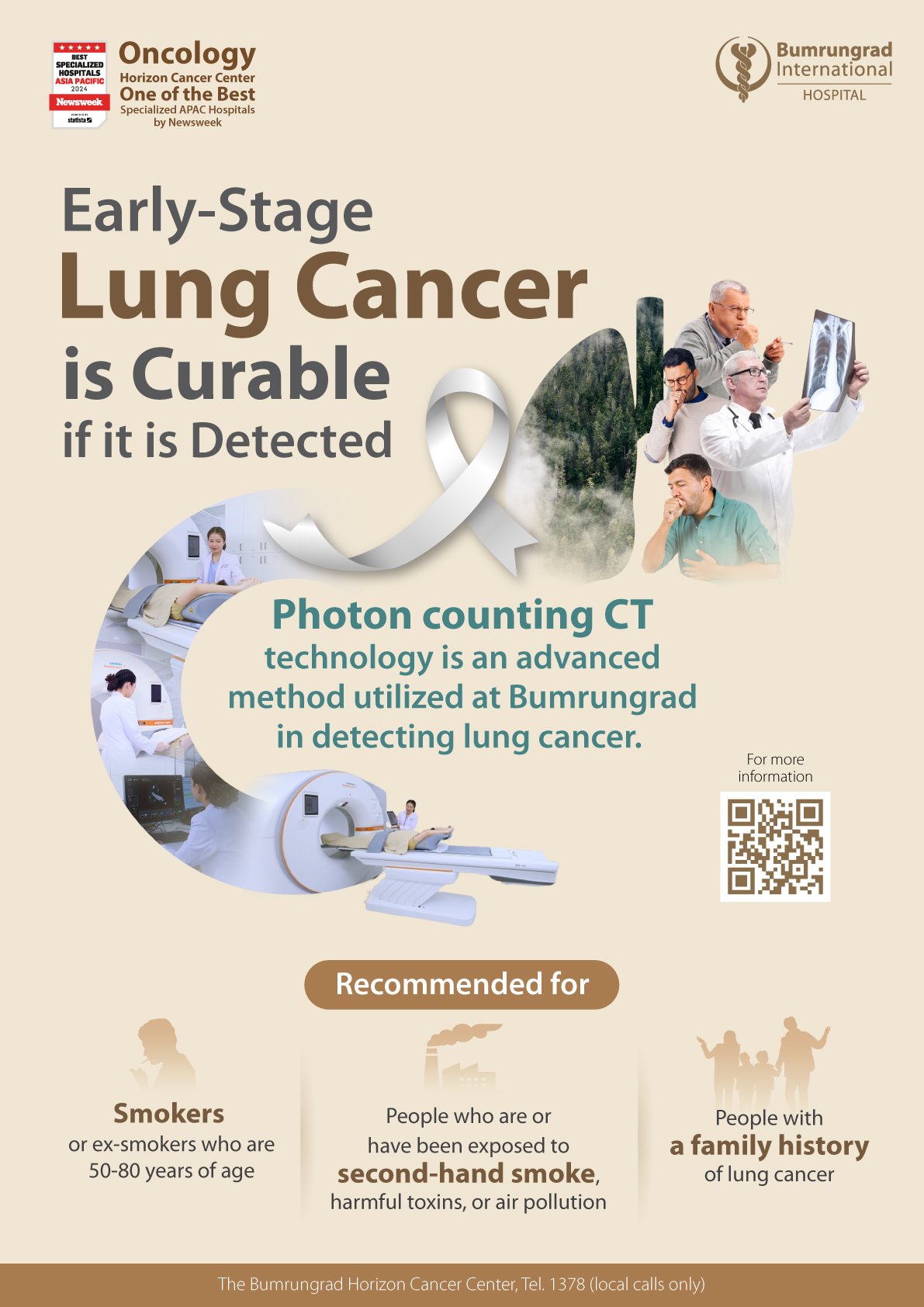
- Cancer Patients – PCD-CT’s superior resolution increases the chances of detecting early-stage cancers, including lung, liver, and other tumors, enabling more timely treatment. It is also highly effective treatment monitoring and detecting the disease recurrence with lower radiation doses.
- Vascular Disease Patients – PCD-CT provides exceptionally detailed vascular imaging, making it useful for diagnosing conditions such as aneurysms and peripheral artery disease. It is particularly effective at imaging small leg vessels with calcifications, aiding in diagnosis and treatment planning.
Additionally, for annual lung screenings, Photon-Counting CT can be an alternative to conventional chest X-rays, offering more detailed and accurate imaging
Photon-Counting CT with AI represents a significant leap forward in medical diagnostics. With unmatched image clarity, reduced radiation exposure, and AI-powered analysis, this technology enhances diagnostic accuracy while improving patient safety and comfort. It is set to revolutionize medical imaging across multiple specialties, from cardiology and oncology to neurology and pediatric care.