bih.button.backtotop.text

Colonoscopy

A colonoscopy is a safe and highly effective procedure for evaluating the health of the large intestine. During the procedure, the doctor uses a colonoscope — a thin, flexible instrument equipped with a high-definition camera and a light to examine the inside of the colon. This allows abnormalities to be examined in detail and generally provides more accurate diagnostic information than conventional X-rays.

About the Colonoscopy

A colonoscopy is a procedure used to examine the inside of the large intestine (colon) and rectum. In some cases, the examination may also extend to the end of the small intestine.
Colonoscopies can help identify the causes of various symptoms, including rectal bleeding, changes in bowel habits, abdominal pain, chronic diarrhea, chronic constipation, abnormal stool, anemia, and unexplained weight loss. It can also help diagnose conditions affecting the colon, such as colorectal cancer, inflammatory bowel disease (IBD), and diverticular disease.
 
Colonoscopies are also widely used for colorectal cancer screening and can be performed in both symptomatic and asymptomatic individuals. During the examination, the doctor may detect colon polyps, which can develop into cancer over time. So, removing polyps can help reduce the risk of colorectal cancer.
 
A colonoscopy is one of the most comprehensive screening methods because it allows the doctor to examine the entire colon and remove polyps during the same procedure.
During the examination, images are captured and transmitted to a monitor in real time. This allows the doctor to examine the colonic lining in detail and take tissue samples (biopsies) for laboratory analysis when necessary.
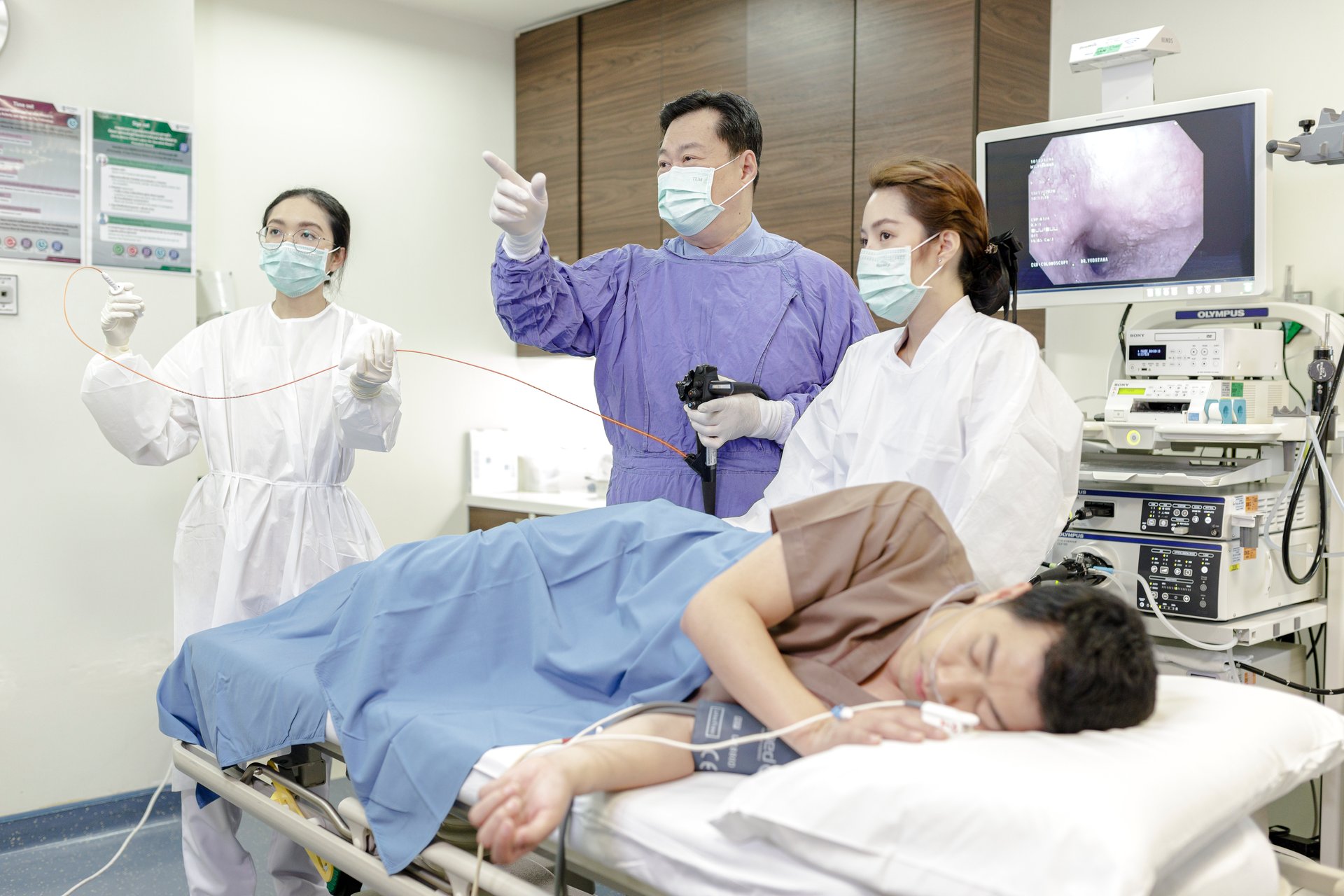
 
Colonoscopy

A colonoscopy offers several important benefits:


1. Investigating the causes of gastrointestinal symptoms
A colonoscopy can help identify and diagnose the causes of symptoms such as abdominal pain, rectal bleeding, chronic diarrhea or constipation, changes in bowel habits, and unexplained weight loss. These may be symptoms of the following:
  • Colorectal cancer
  • Colon polyps
  • Diverticular disease
  • Inflammatory bowel disease (IBD), including ulcerative colitis and Crohn's disease
 
2. Screening for colorectal cancer
A colonoscopy is effective in screening for colorectal cancer. The people in the following groups are recommended to undergo regular colonoscopies:
  • People who have never undergone a colorectal cancer screening should start at age 45
  • People whose previous colonoscopy results were normal may generally undergo repeat screenings every 10 years
  • People with certain risk factors may need to begin screening earlier or undergo screenings more frequently. These risk factors include:
    • A family history of colorectal cancer or colon polyps
    • Inflammatory bowel disease
    • Hereditary conditions, such as familial adenomatous polyposis (FAP)
 
3. Monitoring colon polyps
People who have previously had colon polyps may need follow-up colonoscopies to check for and remove additional polyps.
 
4. Treating certain conditions
A colonoscopy can also be used for:
  • Removing benign growths (polyps) from the colon wall, including larger polyps through techniques such as endoscopic submucosal dissection (ESD) or endoscopic mucosal resection (EMR)
  • Treating intestinal obstruction through the placement of a stent
  • Removing foreign objects from the colon
  • Controlling gastrointestinal bleeding


1. Medical conditions and medication

  • Inform your doctor about any existing medical conditions, such as heart disease, kidney disease, lung disease, or diabetes.
  • Tell your doctor about all the medications you are regularly taking or receiving by injection, as well as any known allergies to medications or other substances. Your gastroenterologist or prescribing doctor will determine whether any medications should be temporarily stopped or adjusted before the procedure.
Medications that require particular attention include:
  • Oral antiplatelet and anticoagulant medications, such as aspirin, clopidogrel, apixaban, rivaroxaban, and warfarin
  • Injectable anticoagulants, such as enoxaparin and heparin
  • Nonsteroidal anti-inflammatory drugs (NSAIDs)
  • Diabetes and weight-management medications, including:
    • Injectable glucagon-like peptide-1 (GLP-1) receptor agonists, such as liraglutide, semaglutide, and tirzepatide
    • Oral medications, such as empagliflozin
  • Dietary supplements and herbal products
Do not stop or adjust any prescribed medication without first consulting your doctor.
 

2. Dietary preparation

Dietary preparation is important because following the recommended diet can help make bowel cleansing easier and more effective.
  • Two to three days before the colonoscopy: Eat a low-fiber diet. Suitable foods include white rice, white bread, fish, chicken, and eggs. Tea or coffee without milk or creamer may also be allowed depending on your doctor’s recommendations. Avoid vegetables, fruits, whole grains, milk, dairy products, and colored beverages, particularly red drinks, which may be mistaken for blood during the examination.
  • One day before the colonoscopy: Consume only clear liquids. Examples: pulp-free clear fruit juices (such as apple juice or white grape juice), clear broth, and clear sweetened beverages.
  • Avoid alcoholic beverages for 24 hours before the procedure.
  • Avoid eating and drinking for 8–10 hours before the colonoscopy, according to your doctor's instructions.
 

3. Bowel preparation with laxatives

  • Bowel preparation with laxatives is one of the most important steps before a colonoscopy. The cleanliness of the colon directly affects the quality of the examination. If the bowel is not adequately cleansed, the doctor may not be able to clearly see the colonic lining and could miss important abnormalities. The procedure may need to be postponed if bowel preparation is not adequately done.
  • Laxatives are usually taken the evening before the colonoscopy. Depending on the prescribed the dose, it may be divided between the evening before and the morning of the procedure. In some cases, patients may take the laxatives at the hospital. Laxatives are available in different forms, such as tablets, liquids, or powders dissolved in water. To stimulate bowel movement and clear out the colon, an enema may also be performed in certain circumstances. This involves inserting a small, soft tube into the anus and introducing a cleansing solution, such as saline, to flush out the lower bowel.
  • As the laxatives take effect, stool gradually changes from its normal consistency to loose. Eventually clear liquid is what’s left. This indicates that the bowel has been cleansed. Patients will have frequent bowel movement through the cleansing period. Ideally, the final bowel movement should be free of solid particles and may be slightly yellow but should be clear, similar to urine.
  • Complete the entire prescribed laxative preparation, even if your bowel movement already appears clear. If you are unable to take the laxatives as instructed, contact your doctor or the hospital.

 
  1. Colonoscopy can be performed on either an inpatient or outpatient basis. Before the procedure, patients must sign a consent form confirming that they understand the procedure and its associated risks. If you have any questions or concerns, ask your doctor for clarification before signing.
  2. The procedure is performed by a gastroenterologist or a colorectal surgeon.
  3. Medication for pain relief and sedation is administered intravenously to help patients relax. Most patients do not experience pain, although some may feel abdominal pressure, bloating, or a sensation of fullness as the colonoscope moves through the intestine.
  4. The medical team monitors the patient's pulse, blood pressure, and oxygen levels throughout the procedure and recovery period.
  5. Patients usually lie on their side with their knees bent toward their chest. The doctor gently inserts the colonoscope through the anus and advances it into the colon. Images from the colonoscope are displayed on a monitor in real time, allowing the doctor to examine the colon and its lining in detail.
  6. As the colonoscope passes through the anus and into the colon, patients may feel some abdominal discomfort or bloating. This is because air or fluid is introduced into the colon to expand it and improve visibility. Special instruments can also be passed through the colonoscope to take tissue samples, remove abnormal tissue, or control bleeding. Although some discomfort may occur, the doctor will attempt to remove as much of the remaining air as possible while withdrawing the scope.
  7. If the doctor detects a growth or abnormal tissue in the colon that may be concerning, a tissue sample can be taken during the same procedure.
  8. A colonoscopy usually takes approximately 30–60 minutes. After the procedure, patients are typically monitored for about two hours to allow the effects of sedation to wear off and to check for possible complications.
 
 
  1. Arrange for a friend or family member to take you home after the procedure. Do not drive or operate heavy machinery for 24 hours because the effects of sedative medication may persist.
  2. You may experience mild abdominal bloating, gas, or cramping due to air introduced into the colon during the examination. Walking and passing gas can help relieve these symptoms. They usually resolve within 24 hours.
  3. Your doctor will usually discuss the colonoscopy findings with you on the same day. If tissue samples were taken, you may be asked to return for the biopsy results, usually within three days, according to the hospital's instructions.
  4. You can resume eating after the procedure, starting with soft foods. Avoid alcohol for 24 hours.
  5. Consult your gastroenterologist or prescribing doctor before resuming your regular medications.
  6. Air travel is generally not recommended for 24 hours after the procedure.
  7. If polyps were removed or there was bleeding during the procedure, air travel is generally not recommended for one week. If travel is necessary, discuss this with your doctor before the procedure so that your condition and fitness to travel can be assessed.
Although a colonoscopy is generally considered a safe procedure, complications can occur. These may include:
  1. Injury to the colon wall
  2. Bleeding following a biopsy or polyp removal
  3. Colon perforation, a tear or hole in the colon wall. This is an uncommon complication, occurring in approximately 0.1–0.3% of cases, and may require medical treatment or surgery.
  4. Contact your doctor immediately if you experience any of the following symptoms.
    • Chest pain or severe abdominal pain
    • Rectal bleeding of an amount greater than half a cup, or bleeding that continues without stopping. Some bleeding may occur for 2–3 days after a biopsy or polyp removal, but heavy or persistent bleeding requires medical attention
    • Chills or a fever higher than 38°C
    • Unusual weakness or fatigue
  5. Care of the intravenous injection site
    Medication is administered intravenously during the procedure. If the injection site has become painful, red, or swollen, you may apply a warm, damp cloth to the area for 15–20 minutes, four times a day for two days. Keeping your arm elevated on a pillow may also help reduce discomfort and swelling. If symptoms do not improve within two days, consult your doctor.  
Other tests may be used to examine the colon, depending on the patient's condition and the doctor's recommendation.

1. Barium Enema

This examination uses a contrast material called barium, which is introduced through the anus to coat the lining of the colon. X-rays are then taken to detect abnormalities. A sigmoidoscopy may sometimes be performed as well to provide a clearer view of the lower part of the colon.


2. CT Colonography

Also known as a virtual colonoscopy, this examination uses computed tomography (CT) to produce detailed images of the colon. It provides more detailed images than conventional X-rays. However, it may not detect small polyps and cannot remove polyps or collect tissue samples for laboratory analysis. It is also less suitable for evaluating inflammation of the colonic lining. A conventional colonoscopy may still be required.


3. Fecal Occult Blood Test (FOBT)

This test checks for hidden blood in the stool. If the result is positive, a colonoscopy may be recommended for further investigation.


4. Sigmoidoscopy

Sigmoidoscopy examines only the lower part of the colon and the rectum, whereas a colonoscopy allows the doctor to examine the entire colon.
 
Colonoscopies are a highly effective standard procedure for screening, diagnosing, and preventing colorectal cancer. It allows doctors to examine the entire colon, detect abnormalities at an early stage, collect tissue samples, and remove polyps that may develop into cancer, sometimes during the same procedure. By detecting and removing precancerous polyps, a colonoscopy can significantly reduce the incidence of colorectal cancer and the risk of death from the disease. It is particularly important for individuals aged 45 and older and those with risk factors for colorectal cancer.


Data from 2025
The Digestive Disease Center at Bumrungrad International Hospital was the first center in Southeast Asia to receive recognition from the American Society for Gastrointestinal Endoscopy (ASGE) for meeting standards in bowel preparation, patient safety, and specialist experience.
  • Adenoma Detection Rate (ADR): 39.6%
This is higher than the international benchmark of ≥35% (ASGE 2024). The rate reflects the medical team's ability to carefully identify adenomas, including small polyps that may develop into cancer over time, allowing them to be removed before they progress.
  • Cecal Intubation Rate: 100%
This exceeds the international benchmark of ≥95% of colonoscopies reaching the cecum, the beginning of the large intestine, supporting a complete examination of the colon.
  • Major complication and procedure-related mortality rates: 0%
According to 2025 statistics, no major complications or procedure-related deaths were reported, reflecting the center's focus on safety throughout the examination process.
Last modify: November 19, 2026

Doctors Related

Related Centers

Digestive Disease (GI) Center

Learn more

Gastrointestinal Motility Center

Learn more

Rating score 6.81 of 10, based on 84 vote(s)

Related Health Blogs